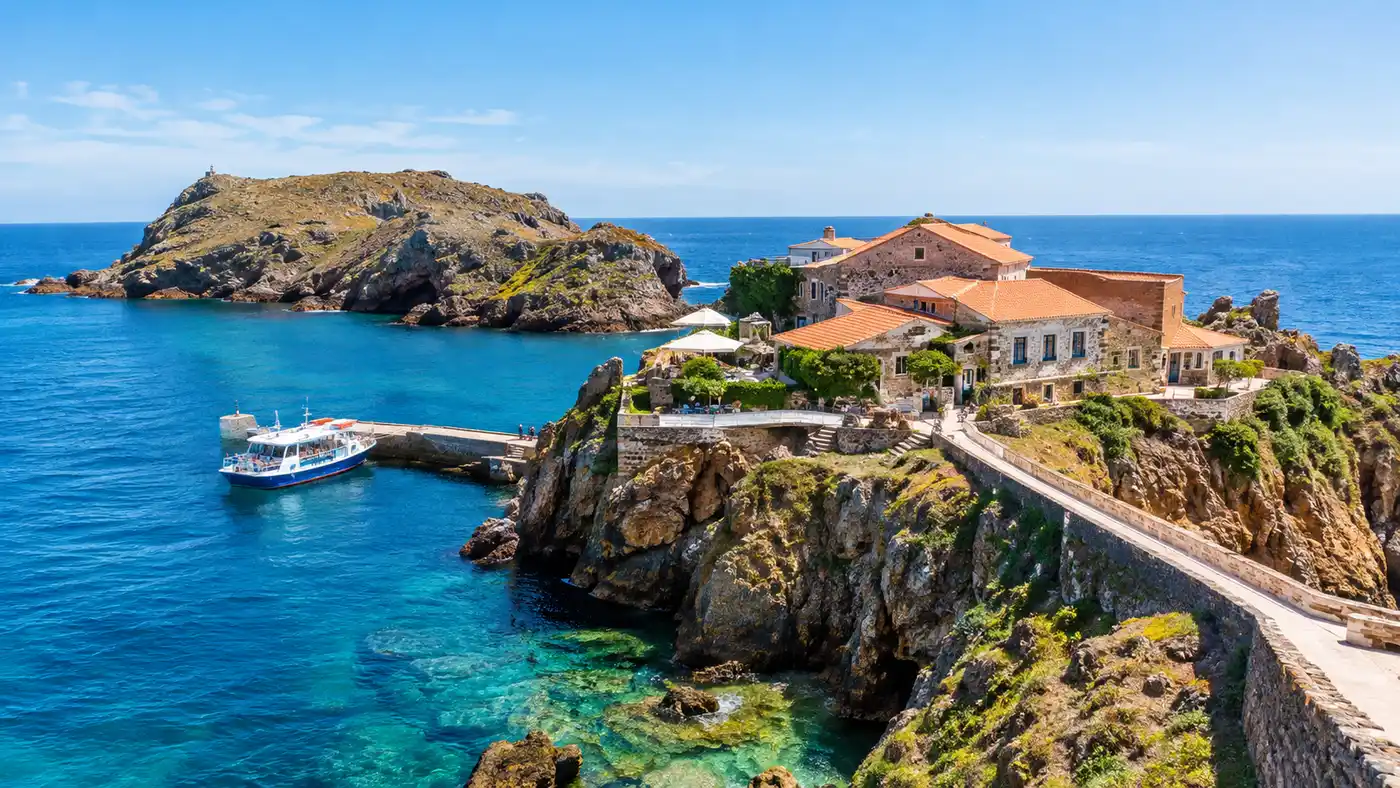
Berlengas Island Accommodation: Hotels and Where to Stay
If you dream of room service, crisp Egyptian cotton, or infinity pools overlooking the Atlantic, you need to adjust your expectations right away. Booking a berlengas hotel is not like arranging a weekend in Cascais or Lagos. Berlenga Grande is an isolated granite rock six miles off the fishing port of Peniche, designated as a UNESCO biosphere reserve where fresh water arrives by tanker boat and diesel generators shut down when the fuel gets low. Most travelers visit for four or five hours and rush back to the mainland on the 16:30 ferry, but staying overnight transforms the entire experience.
Once the last tour catamaran pulls away from the concrete pier, the noise evaporates. You are left with the Atlantic crashing into sea caves, the raucous calls of thousands of nesting yellow-legged gulls, and an impossibly dark sky. The island has two modest places with actual roofs, a cliffside campsite managed by the municipal council, and a couple of private fisherman shacks. Knowing how these options work, when the booking windows open, and what to pack will make the difference between an unforgettable maritime escape and a cold, damp night huddled on a bare mattress.
The Reality of Berlengas Accommodation
Let us be clear about terminology. There is no conventional berlenga island hotel with a reception desk, luggage carts, or daily housekeeping. Berlenga Grande has roughly a dozen permanent buildings clustering around the old fishing cove and a seventeenth-century fortress perched in the water. That is all.
Space is strictly rationed. The nature reserve authority limits total overnight guests to around 100 people across all available beds and tent pitches. Fresh water is piped from small cisterns filled by rain and sea transport, meaning five-minute showers are considered excessive luxury. Electricity comes from solar arrays backed by an old generator, so you will not find air conditioning or hair dryers humming in the bedrooms.
Sleeping here feels closer to staying in an alpine refuge than a coastal resort. You sacrifice convenience for total isolation. When the morning fog rolls off the water around 07:00, before any boats arrive from Peniche, the silence is startling.
Note: Overnight visitors must still register for an approved Berlengas Pass entry permit from the ICNF before departing Peniche, even if you hold a confirmed room reservation.
If you need reliable Wi-Fi, endless hot water, or a choice of dinner spots, staying overnight on the island might genuinely frustrate you. For everyone else, it is magic.
Book your berlengas experience:
Pavilhão Mar e Sol: The Closest Thing to a Berlenga Bed and Breakfast
The only commercial guesthouse on the island sits right above the harbor, attached to the Mar e Sol restaurant. Travelers often call it the berlenga bed & breakfast or the Mesa da Ilha rooms. It operates on the second floor of a whitewashed building, overlooking the turquoise inlet where local dinghies bob in the surge.
There are just six guest rooms. Each room has basic wooden furniture, a double bed or two twin mattresses, and a tiny private bathroom with a stand-up shower. Hot water is heated by gas canisters, which sometimes sputter out if several rooms use water at the exact same moment. It is plain, clean, and smells faintly of salt spray and fried sardines drifting up from the kitchen downstairs. A night here usually runs between €75 and €95 depending on whether you visit in June or August.
Securing a room at this de facto berlengas portugal hotel requires persistence. You cannot click through a slick booking engine or find it on popular reservation apps. You generally have to call the restaurant directly in late spring, often speaking broken Portuguese with whoever answers the phone between lunchtime shifts.
- Room inventory: only 6 double rooms available for the entire public.
- Included amenities: basic bedding, towels, private bathroom, morning coffee downstairs.
- Booking window: reservations open around April or May for the June through September season.
- Payment methods: cash is strongly preferred because mainland card terminals frequently drop signal.
Dinner at the downstairs restaurant is where staying here pays off. Once the day-trippers leave, the staff relaxes, pours carafes of chilled white wine from the Óbidos region, and serves enormous platters of caldeirada de peixe. You sleep twenty yards from the water, listening to the tide lap against the stone quayside.
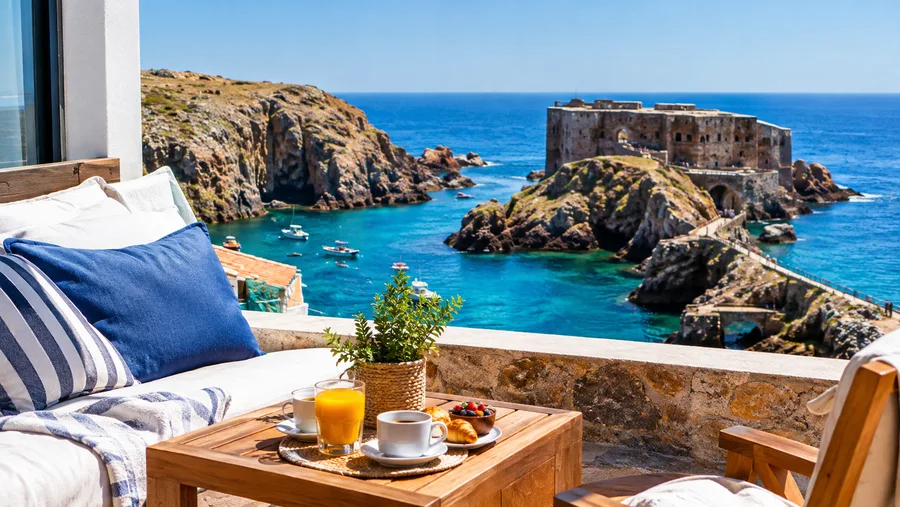
Sleeping in the Fortress of São João Baptista
Out across a narrow stone causeway on the southeastern edge of the rock stands the Forte de São João Baptista. Built in the mid-1600s to repel pirate raids and foreign navies, it is now an austere, atmospheric shelter run by the Associação dos Amigos das Berlengas. Walking into this place feels like stepping onto a windswept movie set.
If you want a traditional berlenga bed and breakfast, the fortress will shock you. It is essentially an indoor campground within thick masonry walls. The bedrooms are old soldier barracks and vaulted powder magazines carved out of the rock. Many rooms have no exterior windows, only wooden doors opening onto the central courtyard or the arched walkways. Inside, you will find bare bunk beds with thin vinyl-covered mattresses. You must bring your own sleeping bag, pillowcase, flashlight, and toilet paper.
Water here is cold. There is no water heater in the communal washrooms, so taking a morning shower takes genuine courage. Electricity runs on a private generator that shuts down around 23:00, plunging the entire fortress into pitch darkness save for the stars and the rhythmic sweep of the Berlenga lighthouse up on the hill.
Pro tip: Reserve room number 8 or 9 if you can choose, as these upper-level quarters have small embrasures that catch afternoon light and avoid the damp chill of the ground-level stone cells.
The cost is shockingly low, usually around €15 to €25 per person per night, plus an annual association membership fee of about €10. You can learn more about the structure's military history in our guide to visiting the Fort of São João Baptista, but sleeping inside it is a raw, thrilling experience that leaves an impression long after you wash the salt from your hair.
Book your berlengas experience:
Camping on the Island and the Berlenga Beach House Myth
High up on the northern ridge overlooking the harbor lies the Parque de Campismo das Berlengas. It is an open, terraced hillside managed by the Peniche town hall. You cannot rent a tent here; you must carry your own gear from the ferry landing up roughly 120 concrete steps.
The wind on this ridge can be vicious. A flimsy supermarket tent will snap poles or tear out its pegs before midnight. You need a sturdy, low-profile dome tent, heavy-duty stakes, and earplugs to drown out the gulls. Between May and July, the birds nest within feet of the camping terraces, guarding their chicks with piercing screams throughout the night. It costs around €8 to €12 per tent pitch per day, and bookings must go through the municipal tourism office in Peniche weeks in advance.
You might occasionally see internet mentions of a berlenga beach house. These are not boutique seaside villas. They are tiny whitewashed houses in the Bairro dos Pescadores, built in the 1940s to house mainland fishermen during sardine season. A few families still hold concessions, and on rare occasions, a room gets rented informally by word of mouth. Do not rely on finding an open fisherman cottage when you arrive on the dock, as these spots stay booked by cousins, friends, and regular spearfishing crews from Peniche.
Pack carefully if you choose camping or the fort. You cannot pop out to a corner shop to buy something you forgot.
- Food supplies: energy bars, dried fruit, bread, and tinned fish for when the one restaurant is closed.
- Lighting: a hands-free headlamp with fresh batteries, because the island trails have zero streetlights.
- Warm layers: a windproof jacket and wool fleece, as nighttime temperatures plummet rapidly.
- Heavy trash bags: every single scrap of rubbish you produce must leave the island on the boat with you.
Comparing Island Accommodation Options
To help you decide where to rest your head, here is how the primary overnight choices on Berlenga Grande stack up against each other and against staying back on the mainland.
| Lodging Option | Comfort Level | Approx. Cost | Bathroom | Electricity |
|---|---|---|---|---|
| Pavilhão Mar e Sol | Modest guesthouse | €75 - €95 / room | Private (warm water) | Continuous (generator) |
| Fortress São João Baptista | Basic stone shelter | €15 - €25 / person | Shared (cold water) | Cuts off at 23:00 |
| Hillside Camping | Primitive camping | €8 - €12 / pitch | Shared block (cold) | None at tent site |
| Peniche Hotel (Mainland) | Modern comfort | €60 - €160 / room | Private (hot water) | Grid power & Wi-Fi |
Looking at that spread makes one thing clear: if you need a soft bed and a hot shower every day, you should book one of the many berlengas hotels in Peniche and take the 35-minute crossing as a day visit. Peniche has dozens of surf lodges, restored townhouses, and waterfront apartments within walking distance of the marina.
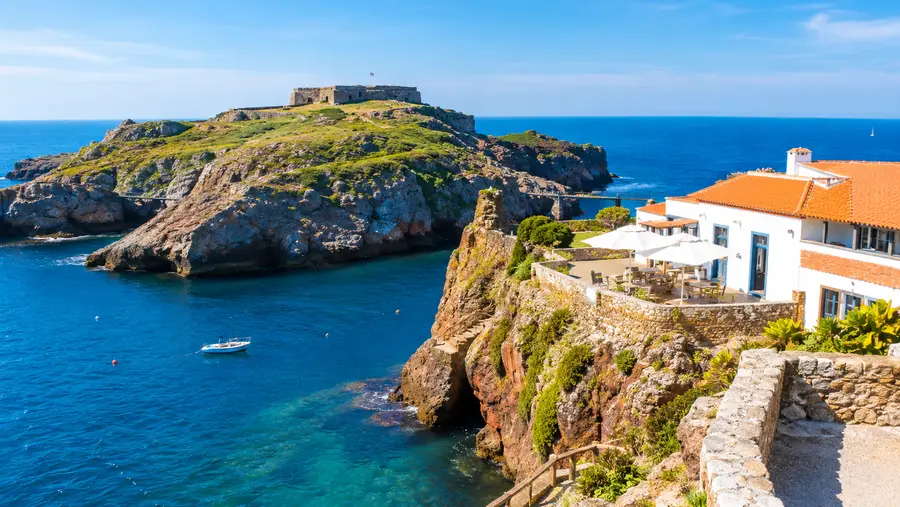
Should You Sleep on the Island or Base in Peniche?
I think the answer depends entirely on your tolerance for rough edges. When I spent my first night out on Berlenga, my expectations were all wrong. I thought I would sit on a terrace sipping espresso while writing notes. Instead, the generator quit, my phone died, the salt air made my bedsheets feel slightly clammy, and the gulls shrieked until dawn.
By 06:30, all irritation vanished. I walked down the stone ramps of the fort alone. The sea was calm like glass, neon orange light bounced off the red cliffs, and there was not another human being in sight. That kind of solitude simply does not exist along mainland Portugal during the busy summer months.
If you choose to sleep on the mainland, you gain access to Peniche's seafood taverns, surf beaches like Supertubos, and reliable transport links back toward Lisbon. You wake up rested, take the morning boat, spend five hours snorkeling the coves, and head back before sunset. It is simple, comfortable, and avoids the logistical headache of securing scarce island beds.
If you choose the island, accept the quirks. Drink a cold Sagres at the harbor, eat the fish soup, sleep under heavy blankets, and watch the ocean turn violet under the stars. For travelers who love wild, untamed places, there is nothing quite like it.
Frequently Asked Questions about berlengas hotel
Is there a luxury berlengas hotel on the island?
No. Berlenga Grande is a protected nature reserve with no luxury hotels or modern resorts. The only roofed options are the modest Pavilhão Mar e Sol guesthouse and the historical fortress shelter.
How do I book a room at the Berlenga Bed & Breakfast?
Reservations for the Pavilhão Mar e Sol must usually be made over the phone by calling the restaurant directly, beginning in April or May. They do not maintain an active online reservation system.
Do I need to bring my own bedding to the Fort of São João Baptista?
Yes. The fortress only provides bare vinyl mattresses on metal or wooden bunks. You must carry your own sleeping bag, sheet, pillow, and personal toiletries.
Can I wild camp on Berlenga Grande?
Wild camping is illegal across the entire archipelago. You may only pitch a tent in the official designated campsite above the harbor after obtaining a permit from the Peniche municipality.
Quick Reference
- Only two buildings on the island offer roofed lodging
- Fortress rooms require personal sleeping bags and cold water only
- Reserve island accommodation at least 2 to 3 months ahead
- Strict luggage limits apply on all island ferry crossings
Book your berlengas experience:
My Take
Do not book an overnight stay on Berlenga Grande expecting a pampering retreat. Go because you want to watch the Atlantic sunset after the crowds depart, explore empty granite pathways under moonlight, and wake up inside a seventeenth-century sea citadel. Pack a headlamp, carry extra drinking water, keep your luggage light, and embrace the wild simplicity of Portugal's most secluded island outpost.
Read more about berlengas.