How to Get to Berlengas: Ferry and Boat Guide from Peniche
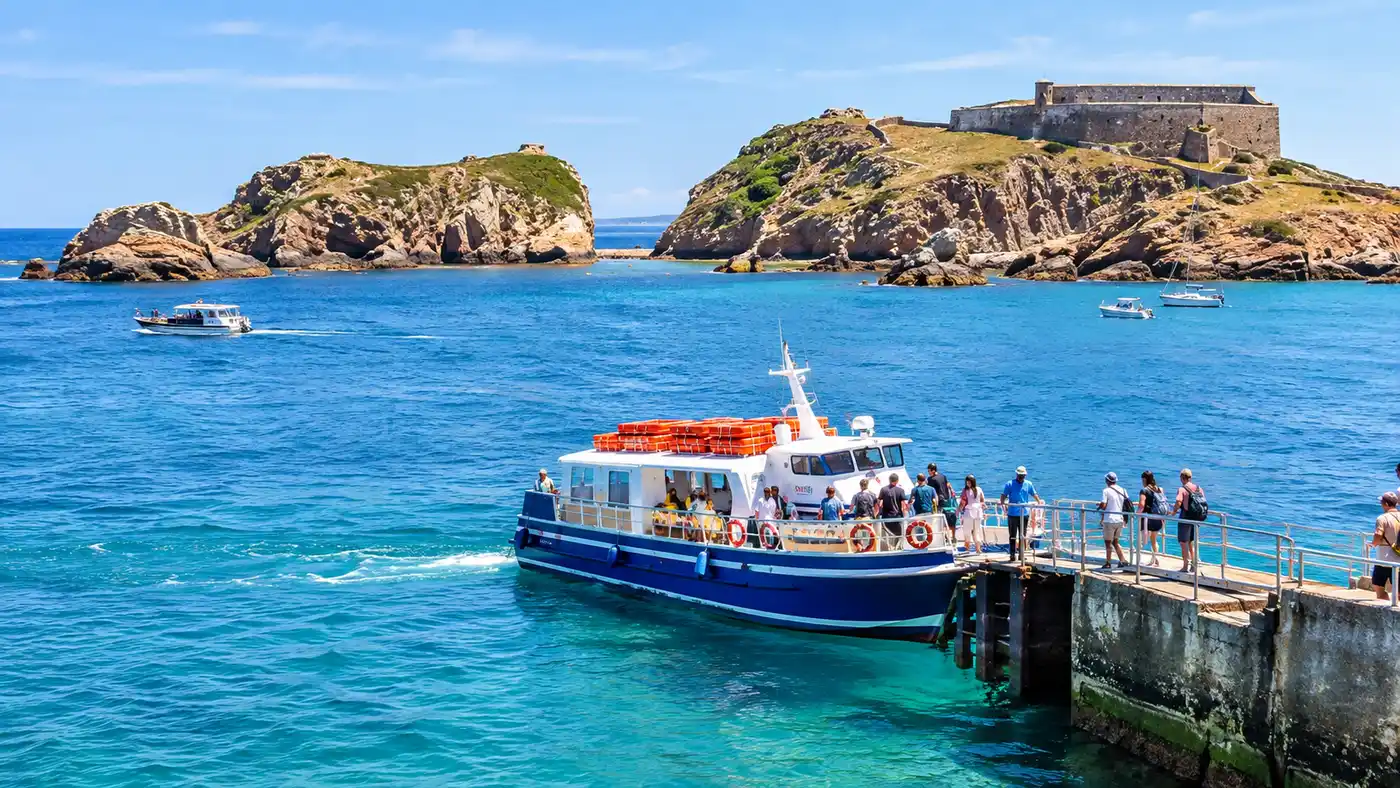
You can smell the diesel and salt air the second you step onto the concrete piers at Peniche harbor. Gulls wheel overhead, squawking over fish scraps tossed from commercial trawlers, while a queue of windbreaker-clad day trippers waits by the ticket kiosks. If you want to reach this jagged pink-granite archipelago ten kilometers off the Portuguese mainland, catching a peniche to berlengas ferry is your only way across. There are no bridges or airstrips out there, just the Atlantic Ocean and a rocky nature reserve that takes no prisoners if you are prone to motion sickness.
Getting your sea legs ready requires a bit of planning. You have to navigate sea state forecasts, government permits, and wildly different boat styles ranging from slow wooden cruisers to twin-engine inflatables that skip across waves like flat stones. This guide covers how to choose your boat from Peniche to Berlenga, what the crossing actually feels like, and how to avoid getting stranded on the dock without the required paperwork.
Book your berlengas experience:
Choosing Your Vessel: Large Ferries vs Fast Ribs
The boat operators lined up along the Peniche marina generally fall into two camps. On one side, you have the larger passenger vessels, including older traditional mono-hulls and stable catamarans. On the other side, you have rigid inflatable boats, locally called semi-rígidos or RIBs. Picking the right one changes your entire morning.
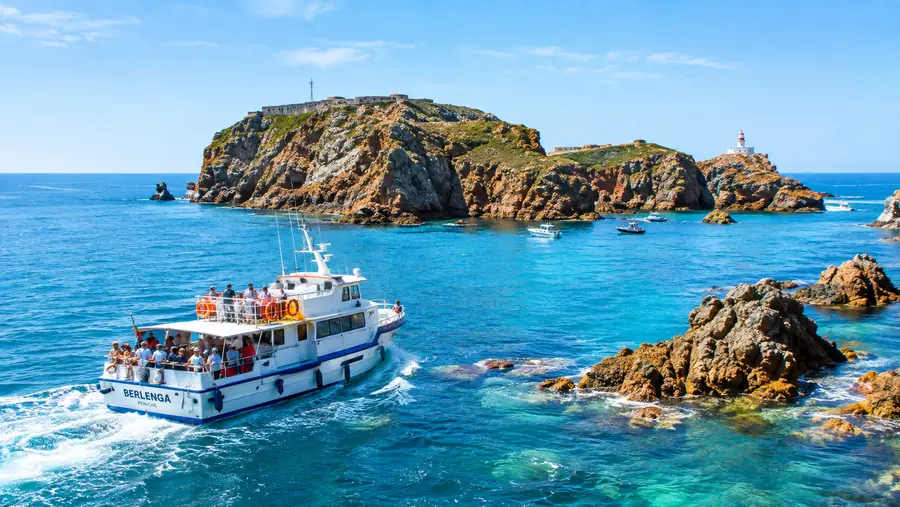
The classic Berlenga island ferry operators run vessels like the Cabo Avelar Pessoa. These boats carry upwards of 80 to 100 passengers. They cut through the water with a steady, heavy roll that some people find soothing and others find nauseating after thirty continuous minutes. The upside is space. You can stand up, wander to the rail, duck under a shaded canopy, or hide in the cabin if sea spray starts drenching the deck. It takes roughly 45 minutes to cross the Berlenga channel on these ships, sometimes extending to 50 minutes if the ocean is chewing up the channel.
Then you have the fast speedboats. Companies like Feeling Berlengas, Viamar, and BerlengaVip run powerful RIBs fitted with bench seating where you straddle padded bolsters like you are riding a mechanical horse. They shave the crossing down to 20 or 25 minutes. You will bounce. On calm summer mornings, it feels like an exhilarating blast across glassy water. If an afternoon north wind kicks up a chop, you will hold on tight with both hands while your lower back absorbs every crest. Honestly, if you have disk issues or neck pain, skip the RIBs entirely and take the traditional boat to Berlengas.
| Vessel Type | Crossing Time | Average Return Fare | Ride Characteristics |
|---|---|---|---|
| Classic Monohull Ferry | 45 - 50 mins | €22 - €25 | Slow roll, high capacity, covered seating, best for luggage |
| Modern Catamaran | 35 - 40 mins | €25 - €28 | More stable side-to-side, upper open deck, smooth ride |
| Rigid Inflatable (RIB) | 20 - 25 mins | €28 - €33 | Fast, bumpy, low to water, guaranteed sea spray, great adrenaline |
Price differences between operators are negligible, usually coming down to five or six euros. Many tickets bundle a 30-minute side tour on arrival, where a small glass-bottom skiff takes you into the island's sea caves like the Furado Grande. Buying the bundle at the Peniche marina often saves you about €8 compared to arranging a cave trip once you land on the island.
The Berlengas Pass: Do Not Skip This Step
Since 2022, the Portuguese Institute for Nature Conservation and Forests (ICNF) has restricted the number of simultaneous visitors to Berlenga Grande to 550 people at any one time. This rule exists to protect ground-nesting seabird colonies and prevent the tiny granite paths from eroding into the sea. Because of this cap, you cannot just turn up at the harbor, buy a boat trip to berlengas, and hop aboard.
Before any ferry company will validate your booking, you must register on the official government website to obtain a Berlengas Pass. The portal generates an individual QR code with your name and passport or national ID number. If you want a complete walkthrough of this bureaucratic puzzle, check our guide on the Berlengas Pass entry permit. Do it before spending money on boat tickets.
Note: Maritime police and dock officials regularly scan visitor passes before allowing anyone down the boarding ramps at Peniche, and your ferry operator will deny boarding without a valid permit code.
Most travelers secure their boat from Peniche to Berlenga first through an online booking platform, then immediately grab their permit for the corresponding date and arrival window. A few tour companies now integrate the permit fee into their checkout flow, collecting your passport details directly, which spares you the clunky government website. Just ensure you see a confirmation email explicitly showing your assigned permit numbers before you leave your hotel.
Where to Board at Peniche Marina
The boarding point for all passenger boats is the Marina de Peniche, situated along the Ribeira Velha channel right on the edge of the historic town walls. If you drive in from Lisbon or Nazaré, aim for the marina's long public parking areas. Avoid driving into the narrow alleyways of the old quarter; you will get trapped behind a delivery van and miss your departure.
Pro tip: Free parking fills up fast by 9:00 AM in July and August, so aim for the dirt lot near the fire station (Bombeiros) if the harbor promenade is completely packed.
A string of wooden ticket kiosks lines the pavement on Rua Vasco da Gama. Every boat operator has a hut painted with their company logo. Even if you hold a mobile ticket, you normally need to stop by the kiosk 30 minutes before departure to show your Berlengas Pass, get a paper boarding card or wristband, and learn which boarding gate your vessel is using.
Here is what you should expect during check-in:
- Check-in window: arrive at least 35 minutes early to swap digital vouchers for boarding passes at the company shack.
- Gate access: access down to the floating pontoons opens roughly 15 minutes before the boat departs.
- Gear inspection: crew members will check that you have closed-toe shoes or secure straps, because boarding wet floating pontoons in flimsy flip-flops is hazardous.
- Luggage storage: if staying overnight, hand your heavy backpacks to deckhands who stack bags in forward waterproof holds.
There are decent public restrooms near the harbor master office, plus two casual pastelarias right across the street where you can grab a warm pastel de nata and an espresso while you wait for boarding. Take advantage of those bathrooms. The facilities on the smaller boats are either non-existent or cramped enough to make you regret trying to use them while pitching on open swell.
Book your berlengas experience:
The Atlantic Crossing: Dealing with the Swell
The stretch of water separating Peniche from the archipelago is notorious among local fishermen. Even on cloudless July afternoons when mainland Portugal feels still and hot, the Atlantic churns across the shallow continental shelf here. You leave the calm protection of Peniche's stone breakwater, round the dramatic cliffs of Cabo Carvoeiro, and suddenly the horizon starts tilting wildly.
Seasickness is a genuine factor here. I have seen confident hikers turn green ten minutes past the lighthouse. If you know your stomach is sensitive, take preventative measures on land:
- Medication timing: swallow motion sickness pills (like dimenhydrinate or Portuguese Vomidrine) at least 45 minutes before boarding so they enter your bloodstream before the boat starts pitching.
- Seat selection: sit low down and dead-center near the stern of the boat, where rotational motion and wave lift are minimal compared to the bow.
- Horizon focus: keep your eyes fixed on the distant outline of the island or the Peniche headland rather than staring at your phone screen.
- Airflow: stay out in the wind; stuffy enclosed lower cabins multiply nausea within minutes of the first heavy swell.
If the weather turns genuinely dangerous, operators cancel departures without hesitation. The harbor master issues port closures when wave swells exceed three meters or when gale-force winds scream out of the northwest. If your peniche to berlenga island ferry gets canceled due to sea conditions, operators offer a free reschedule or a direct refund. Keep your plans flexible if you visit during May or late September.
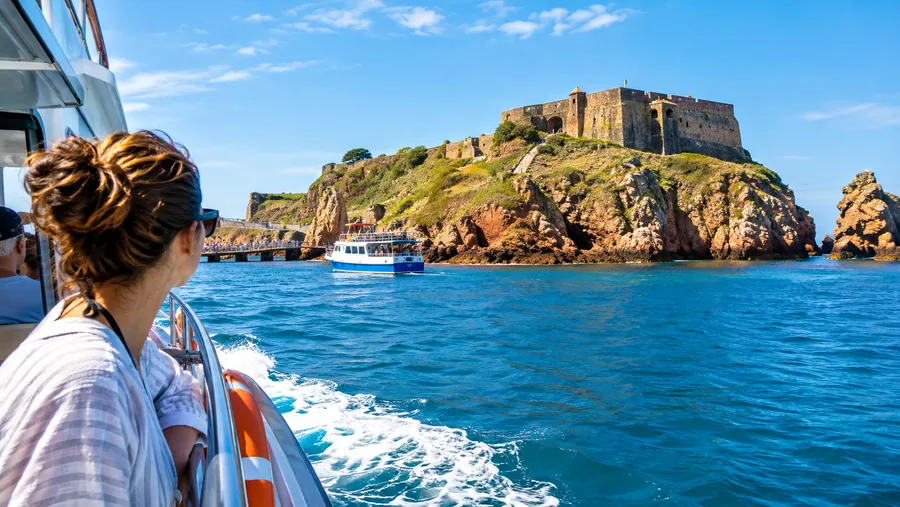
The approach to the island makes the rough ride worth every drop of sea spray. The red granite towers loom out of deep cobalt water. You cruise past tiny islets like the Cerro da Velha before rounding into the sheltered bay of Carreiro do Mosteiro. The water here is calm, clear, and glowing with an eerie turquoise shade over patches of white sand. Disembarking takes place on a narrow concrete jetty where you will immediately see paths heading up toward the walking trails and the historic Fort of São João Baptista perched across its stone arches.
Schedules, Seasons, and Return Trips
The ferry season runs on an operational calendar dictated by winter storms. The vast majority of boat companies run from May 1st through mid-October. Outside of those months, Berlenga Grande becomes a desolate wildlife outpost inhabited only by lighthouse keepers and nature wardens, with occasional charter skiffs heading out if a window of flat sea opens up.
During peak summer (July to August), departures from Peniche happen multiple times daily. The earliest ferries push off around 9:00 AM, with subsequent runs at 10:00 AM, 11:30 AM, and early afternoon. Return sailings from the island typically start heading back to Peniche around 3:30 PM, with the final boats leaving between 5:30 PM and 6:30 PM. Never miss that last scheduled boat. There are no regular passenger water taxis waiting to rescue day-trippers after hours, and island shelter is strictly limited.
Off-peak months see a reduced schedule, often limited to one morning departure and one mid-afternoon return trip. If you book a round-trip ticket, your return time is fixed to that specific operator's vessel. You cannot swap to another company's boat just because their schedule looks more convenient after you get tired of hiking under the midday sun.
Frequently Asked Questions about peniche to berlengas ferry
How long is the ferry from Peniche to Berlengas?
The crossing takes between 20 and 50 minutes depending on the craft. Fast rigid inflatable boats take around 20 to 25 minutes, modern catamarans take roughly 35 to 40 minutes, and larger traditional monohull ferries take around 45 to 50 minutes.
How much do Berlenga ferry tickets cost?
Adult return tickets usually cost between €20 and €33 depending on boat speed and company. Tickets that include an organized cave boat excursion around the island cliffs run closer to €30 to €42 total.
Can I visit Berlengas in the winter?
Scheduled passenger ferry operations stop around mid-October and pick back up in May. Private maritime tourism companies occasionally run weather-dependent charter crossings during mild winter days, but rough Atlantic swells make trips infrequent.
Where does the ferry depart from in Peniche?
All commercial ferries depart from Marina de Peniche along the Ribeira Velha canal, right across from Rua Vasco da Gama in downtown Peniche. Look for the designated operator shacks along the main pedestrian walkway.
Quick Reference
- Boarding point: Marina de Peniche
- Crossing time: 20 to 50 minutes
- Operating season: May to mid-October
- Visitor limit: 550 people at one time
Book your berlengas experience:
Before You Head to the Marina
Treat this trip like a short maritime expedition rather than an easy walk to a city beach. Pack windproof layers regardless of how warm the harbor feels when you leave your car, because the wind across the Berlenga channel will chill you through a cotton shirt. Double-check your Berlengas Pass registration, grab your sea sickness tablets early, and book your boat slots at least two weeks ahead if traveling during July or August. Once you step off that jetty onto the granite rock, you will see why this isolated marine sanctuary remains one of Portugal's most raw Atlantic escapes.
Read more about berlengas.